

Main Partner
Ministry of Tourism and Wildlife (Malawi)
The project was jointly developed in collaboration with the Ministry of Tourism and Wildlife, with an existing Memorandum of Understanding supporting implementation and coordination.
Project Objectives
Overall Objective
To develop and implement a drone-based monitoring and protection system that enhances wildlife conservation and security in Malawi’s national parks.
Specific Objectives
- 1. To identify key wildlife species within targeted national parks and understand their habitat requirements.
- To design and deploy a drone-based monitoring system capable of tracking wildlife in real time.
- 3. To establish a drone-based protection mechanism to deter poaching and other illegal activities.
- 4. To assess the effectiveness of drone technology in reducing wildlife crime and improving park security.
Project Description
The Drone-Based Monitoring and Protection of Wildlife project is a conservation-focused initiative led by Tech265 in partnership with the Ministry of Tourism and Wildlife. The project seeks to strengthen national park protection through the use of modern drone technology, addressing long-standing challenges associated with traditional patrol and monitoring methods.
National parks in Malawi face persistent threats including poaching, illegal hunting, logging, and mining. Conventional monitoring approaches are often limited by terrain, cost, response time, and risks to ranger safety. This project introduces drones as a practical, efficient, and cost-effective solution to improve surveillance, response capability, and wildlife monitoring.
Core Project Components
- Mapping and Surveillance:
Drones equipped with high-resolution cameras will be used to map park boundaries and continuously monitor protected areas, enabling early detection of illegal activities.
- Rapid Response Support:
Real-time aerial intelligence will support rangers in responding quickly to security breaches, improving coordination during patrol operations.
- Detection and Deterrence:
Thermal imaging technology will allow night-time monitoring, while onboard loudspeakers will help deter intruders and illegal hunters.
- Wildlife Monitoring:
Drones will track animal movements, monitor endangered species, and identify potential environmental or human-related threats.
- Capacity Building:
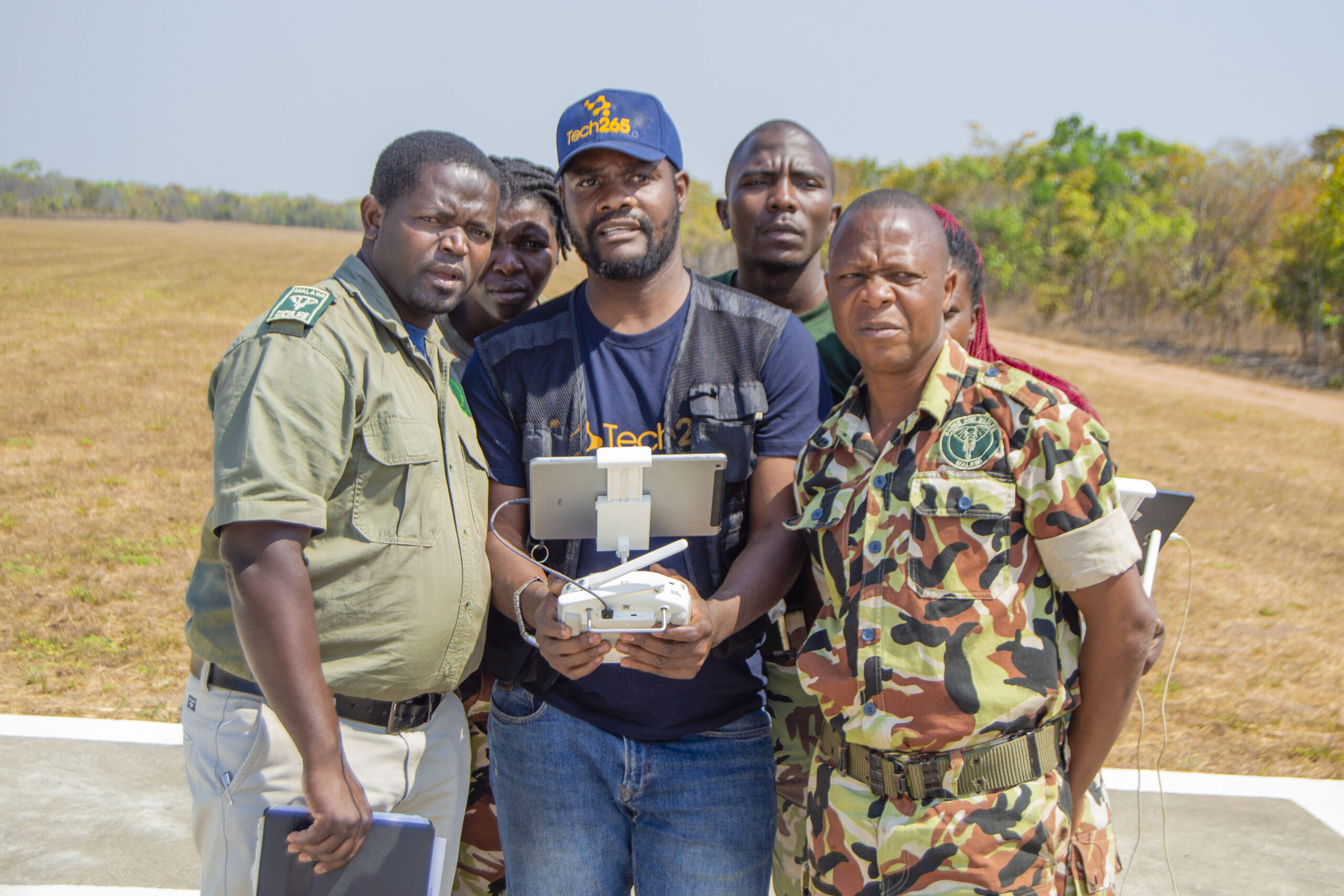
Rangers will receive hands-on training in drone operation, data interpretation, and operational planning to ensure long-term sustainability of the program.
- Implementation Focus
Initial implementation includes ranger training and operational deployment within selected national parks, with scalability across Malawi’s protected areas. The project prioritizes ranger safety, improved intelligence gathering, and data-driven conservation decision-making.
Expected Outcomes
- Improved security and reduced poaching incidents in national parks.
- Enhanced ranger capacity and safer patrol operations.
- More efficient wildlife tracking and ecosystem monitoring.
- Lower operational costs compared to traditional surveillance methods.
- Increased conservation awareness among surrounding communities.
- Development of a structured framework and best-practice guidelines for drone use in wildlife conservation.
Project Info
- Category: Digital Technology
- Client: Ministry of Tourism and Wildlife (Malawi)
- Location: Malawi National Parks